Matthew Word Bain

How to Make a Website Functional by Writing a Blog – Part Three

In part one of this series, I wrote about how I was using this blog to get my website up and running, regardless of how unfinished it might be. In part two I listed all the steps that together form my process for publishing the blog.

In this third part of the series I go into some of the reasons why this has worked for me. While my process may or may not work for you, I hope you will at least find some principles here that you can apply to your own. Here are the biggest reasons the process works for me.

This process empowers me to start by reducing the expectations I place on myself.

I know I perform better as a writer without the pressure of expectations weighing me down; this process removes that pressure.

Barbara Sher, one of several people often referred to as the inspiration for the term “life coach,” spoke of reducing anxiety by reducing the sense of danger that gives rise to it.

By reducing expectations, I reduce the danger that I will fail to meet them: it is easier to begin when I improve my chances of success.

Another way I think of this is in terms of expanding my comfort zone. The old notion of “leaving your comfort zone” is to me misguided, as doing so invariably increases the sense of danger that generates anxiety.

By stretching my comfort zone a little at a time – without ever leaving it – I am always expanding the area in which I can operate functionally without undue anxiety.

Once I have started, this process allows me to continue without experiencing overwhelm.

When I show up to work each day and walk away with a pocket full of small successes, I am not just motivated to return the next day, I am inspired by my success. This inspiration helps me do better work each day and, a little at a time, the whole thing grows and improves.

This way I ramp up to a full scale process in a way that is always manageable. It allows me to feel my success by earning the small gains I intend to make and do make by showing up and following the simple steps I have laid out.

This process generates the outcome I seek to create.

Over time, finished pieces emerge. As these accumulate, I have confirmation by way of demonstration that I am capable of sticking with the process of making this blog.

This allows me to work as little or as long as I want at this process, as my intention is to titrate this work and succeed by the compounding of incremental gains. When I do spend a long time at it, it is because I have found flow and am riding the wave while it lasts.

It is important for me that I am never required to spend a long time working on it. So long as I show up each day I intend to and move the process forward by any substantive amount, I am making progress and furthering my aims.

[several months later]

As with parts one and two of this series, the first portion was written months ago while I was snowed in at home. The process was put on pause for a few months, and then I picked it up again where I had left off.

My process has, of course, changed. The principles that gave the process its shape, however, have not. I am not writing nearly so intensively as I was in January, in part because it doesn’t suit my schedule. But I have found a rhythm that works.

I am able to publish a new original post every week without burning myself out in the process. I have created a vehicle for sharing my creative work and am employing it on a regular basis. As I am regularly publishing original creative work, there is new purpose to the creative practices which feed this publication.

I have also gained a clearer vision for what I want the site to be beyond the blog, and I have found myself making unexpected progress improving the functionality of the site as well.

What I am taking away from this experience is that by creating a process that plays to my strengths and avoids my weaknesses, I have been able to launch this site successfully by creating an active blog.

How the rest of the site unfolds will be an adventure, and one I am excited to be on.

The most recent unfolding has occurred in the process of editing this article. I have realized that the pressure of expectation has returned to my process.

This has come primarily from the rigidity of the schedule I have set for myself, and also from my historical ambivalence about expository writing. In order to continue to succeed with this project I need to change the demands I am making on myself.

This website is intended primarily as an outlet for my creative work. While writing articles can certainly fall under that heading, for me it is always secondary to visual art, poetry, and music. Expository writing is most useful to me when in service to these, my primary modes of creative expression.

I was excited to write this series of posts back in January when I was snowed in at home. It gave me purpose and let me create my own light at the end of the tunnel of snow, something to work toward and look forward to. When once again I find myself excited to write in that way, I look forward to returning to the process.

Writing every month only because I have set myself that task is all but guaranteed to spoil my love of writing. Because of this I must, for now, set it aside as a practice. I have not yet decided what will replace the monthly article published on the new moon, but I will figure it out over the course of the next month.

I have made this website and blog structurally flexible in order to serve the mutable nature of my creative practice, as I need a great deal of flexibility in order to maintain flow in my creative work. So, while the process is already changing, this is precisely why flexibility is built into the structure of my approach.

Meanwhile, through the process of writing these articles and publishing the blog, I have not only gained clarity in my vision for the site, I have begun to see new elements of flow in the space between this blog and my other creative projects. I look forward to following the new golden threads involved with some of these elements as I move forward into the great unknown.

[Here are the links to part one and part two of this series.]

There is a new post every new moon, although at this point its nature remains undetermined… please stay tuned!

How to Make a Website Functional by Writing a Blog – Part Three Read More »

In the Zone

In the Zone 

Outside the city

Beyond the outskirts

A place no one goes who is not pursued

Gas masks and suspicion accompany those who do not belong
Pushing past perspective

Far beyond all known referents

Outside of time,
Shot through with space

My home
Away from shores of thought

Past breakers of tradition

A boat made of stillness

Here I can rest

Wednesday, 22 July 2020

This is the second poem in Les Mots sans Images, a series of original poems.

I post a new poem every waning quarter moon.

You can listen to a rendition of the poem within an audio landscape below:

In the Zone Read More »

An Evening in June

This is the second drink in The Alchemist’s Notebook, a series of original drink recipes. I post a new recipe every full moon.

Brandy in this drink is the warmth of a summer evening, refreshed by the bright bitterness of dry curaçao, while the complex herbal notes of génépi and spicebush float in on the cool breeze of floral elegance that is crême de violette.

An Evening in June 

1.5 oz brandy
.75 oz dry curaçao
.5 oz crême de violette
.25 oz génépi
.5 oz spicebush simple syrup*
garnish maraschino cherry

Shake all ingredients with ice, strain, serve in a coupe glass.

* Spicebush simple syrup (and alternative)

To make spicebush simple syrup, first collect spicebush. Of the spicebush leaf, twig, flower, green and ripe fruit, each is an individual expression of the plant's range of flavor. Any or all of these will produce a fine simple syrup. The twigs are the mildest option, the berries the strongest. Combine a handful of spicebush (to taste) with equal parts sugar and water in a sauce pan and bring to a simmer. Stir until the sugar is fully dissolved, let cool, strain.

If you are not in a position to forage for spicebush where you live, allspice is a close alternative.

An Evening in June Read More »

How to Make a Website Functional by Writing a Blog – Part Two

As I described in my first post, I have taken a bold step to make this website functional: I have chosen to publish this blog before doing anything else to make the site presentable. The following describes my process as I proceed along this trajectory.

I begin by deciding what I want to create: I want to create a website that functions as a platform for publishing my creative work. For the moment that creative work will consist of and be woven into this blog; over time additional features will emerge.

In order to create this blog I take several simple steps and repeat them, adding a simple step each work session until I arrive at the full complement of the practice.

First, I create a list of potential blog topics. These include ideas for individual posts as well as recurring topics.

Second, I begin to write drafts of these topics. I write what is known in the trade as a “shitty first draft” [SFD] for a few of these topics in each work session. This is a way of making it past the initial blank page without a prohibitive amount of effort.

Making it past the blank page is inherently valuable, but this step also facilitates traction in editing. The SFD guarantees a strong opinion about what I have to edit and tends to make obvious what needs to change.

Third, I begin to edit these drafts. As I make additional editing passes over each one, final drafts emerge.

Fourth, I begin publishing these final drafts as they accumulate. I take into account the sort of lead time I need in order to feel comfortable in the process of writing and publishing, as well as the sort of cadence I want the blog to have. I like to have a few completed pieces in the queue before I begin, as that reduces the pressure I feel to complete the next post.

To recapitulate, the steps I have taken are the following, beginning with one on the first day and adding another each day I work until the whole list of steps is in play every time I work on the project:

  1. list topics
  2. write “shitty first drafts”
  3. first pass edit or redraft a post
  4. publish as final drafts accumulate

[several months later]

When I wrote the above portion of this post, I was snowbound in the middle of January. As there was nothing to be done out of doors, I went to work inside.

I did not know then if I would wind up moving forward with this project. I wanted to see if I could develop the habits I would need in order to follow through with publication.

As it turned out, I was able to maintain the process I described, at least as long as I was snowbound. After that, life took over again and I had to set the project aside for a while.

I returned to it in the middle of May for the first time since late January. Two weeks of work while confined by snow generated an enormous amount of material and resulted in a great deal of new clarity in my vision for the blog.

As I pick up where I left off I can see how valuable my efforts were on this foundational work, as it has allowed me to follow through with little enough effort that the process is easy enough to maintain.

As I spend more time writing and working on the site, I also find I have a new level of clarity about my vision for the website as a whole, beyond the initial project of the blog.

Having a solid handful of not only posts but series of posts to draw on has made it easy for me to hit the ground running at a pace which might otherwise take me months to gain.

While my intention was to maintain continuity in my process from January on, I also know that disruption is woven into the pattern of life. I am learning to navigate unexpected changes of plans with growing faith in my own resilience, and witnessing the unfolding of this blog through publication reminds me that resilience continues to grow as I proceed.

For more about how this process began, please see Part One of this series. In Part Three we will look at some of the reasons this process has worked for me. You will have to find your own way, of course, but I hope this account of my process encourages you and helps you generate ideas about what might work best for you, whatever project you may be contemplating.

How to Make a Website Functional by Writing a Blog – Part Two Read More »

Enantiodromia

I have published many photograph and poem pairings online; this series, Les Mots sans Images marks a return to posting poems on their own.

I will post a poem in this series every waning quarter moon.

Enantiodromia

Stuck, I turn still
Like
In a skid
I turn the wheel
In the wrong
Direction
And

Hope...
It feels wrong;
It works well

Poised, I feel fear
Now
the danger
is in
Believing
There is danger.

When fixity
Becomes flow
And each no turns
Relentlessly into a new yes
And each step is like a whole flight
Of stairs and climbing them
I'm flying and instead
Of growing weary
I am feeling reinvigorated
by the work and
I know this is what I was born to do
and I konw this is what I have always wanted
And every day is better than the last
and now
I have traction,
motion, and momentum...

Purpose.
It feels right;
It plays well.

Monday, 20 July 2020


Enantiodromia Read More »

Taming the Beastie

This is the first drink in The Alchemist’s Notebook, a series of original drink recipes. I publish a new recipe every full moon. If you would like to know more about the origin of these drinks, please read on past the recipe below.

Taming the Beastie has a beautiful, subtle appearance: a grey, green color, with a bit of cherry red. The Crême de Violette does most of the taming, while the added sweet of the spicebush and its complexity with that of the Génépy bring the drink to coherence and round out the flavor.

Taming the Beastie 

1.5 oz Ardbeg Wee Beastie
.5 oz crême de violette
.5 oz spicebush simple syrup*
.125 oz Génépy
garnish Luxardo maraschino cherry

Build on ice in a rocks glass, stir, garnish, serve.

* Spicebush simple syrup (and alternative)

To make spicebush simple syrup, first collect spicebush. Of the spicebush leaf, twig, flower, green and ripe fruit, each is an individual expression of the plant's range of flavor. Any or all of these will produce a fine simple syrup. The twigs are the mildest option, the berries the strongest. Combine a handful of spicebush (to taste) with equal parts sugar and water in a sauce pan and bring to a simmer. Stir until the sugar is fully dissolved, let cool, strain.

If you are not in a position to forage for spicebush where you live, allspice is a close alternative.

About the Drink

I think it’s fair to say that most cocktails which feature Scotch tend to prescribe a blended Scotch for the purpose. Certainly with the drink known as the Godfather this tends to be the case. That elegant recipe calls for some proportion of Scotch to amaretto liqueur, served on the rocks.

While I can appreciate a good blended Scotch, I for one enjoy the challenge of finding a place for a flavorful single malt within a mixed drink. Taming the Beastie is ultimately a riff on the Godfather, with a wonderful single malt, a substitution for the amaretto, and a couple splashes of additional herbal notes to round it all out.

Wee Beastie is a heavily peated single malt from Ardbeg distillery on the Isle of Islay. Aged for only 5 years, it has a youthful vigor that stands in contrast to smoother, older bottles from the same region.

The Beastie sips very well neat, and I believe this drink is a demonstration of its potential to play an integral part in a carefully considered cocktail. As with every other ingredient, please feel free to substitute what you may prefer.

Rothman & Winter’s Crême de Violette is a fine, subtle bottle of a viscous liqueur in a beautiful hue. The “crême” is a reference to the high sugar content, not the presence of dairy. In this drink it takes the place of the amaretto as the primary sweet component of the drink.

Spicebush simple syrup is added for the cohering power of its sugar content, as well as for a wilder herbal touch, further complemented by the alpine herbal Génépy, an artemisia based distillation. While Génépy is often recommended as a substitution for the recently rare Chartreuse Green, it is a compelling and versatile bottle in its own right.

For the garnish, a Luxardo maraschino cherry is specifically indicated, as all other brands of preserved maraschino cherries for garnish are not only inferior, they may as well represent a different product. If you can spring for this brand, you will be rewarded by the quality of the product as a component of the drink. If Luxardo is not an option for you, you might try a few dried tart cherries instead, or any other garnish that strikes your fancy.

About the Drinks

Most every evening I create an original drink to share with my partner. We have apparently been enjoying this tradition for a couple of years now, as my record of recipes extends back at least to May 2024.

Having never mixed anything more than a gin and tonic or martini before, I have been on a journey to become adept at creating cocktails. I continue to learn how flavors play together, how different types of liqueurs interact, and how to get better at reliably making drinks my partner and I like.

Over the past couple years I have explored spirits and a wide range of liqueurs, finding my way by improvisation. I have also learned a great deal from mixing the few dozen drinks I have made from recipes.

I have found my way by trial and error with occasional detours to explore particular drinks that provide useful structures which make riffing a joy. In addition to the Godfather, the Martini, Negroni, and Last Word each provide a simple structure with incredible range for substitutions.

I look forward to writing in greater depth about what I have learned; for now I will be sharing recipes with minimal commentary, this edition notwithstanding…

Homemade Liqueurs

Around the same time I started making these drinks, we started foraging for liqueur ingredients in order to begin stocking the bar with our own creations.

While all the spirits are necessarily proprietary, it has come to be a rare occasion when I buy a liqueur for the bar, as I have transitioned over the past year to a bar stocked with only our own liqueurs.

In the beginning, most of the recipes I share will be made exclusively from proprietary bottles, so you should be able to obtain the necessary ingredients by purchase, should you wish to try one on for size. Where there are homemade simple syrups involved, I will provide a recipe.

Over time, more and more of the drinks will include homemade liqueurs. As this happens I will begin posting both suggestions for proprietary substitutions and recipes for making these liqueurs yourself.

In the interim – and always – I encourage you to use your own judgment and knowledge of your own tastes to good effect when making any of these drinks. Substitute freely, and riff on.

This practice brings me immense joy, no doubt in part from the opportunity to indulge in playful curiosity as a guiding principle in my process. I also benefit enormously from this practice as a ritual. The exquisite attention my partner and I pay to the experience of the drink is a relaxing way to connect at the end of each day.

[Note: The links I provide in this blog are to sites with which I have no affiliation, and from which I receive no remuneration. I share them for the sake of information, and/or the value they have provided me, in the hope they might also benefit you.]

Taming the Beastie Read More »

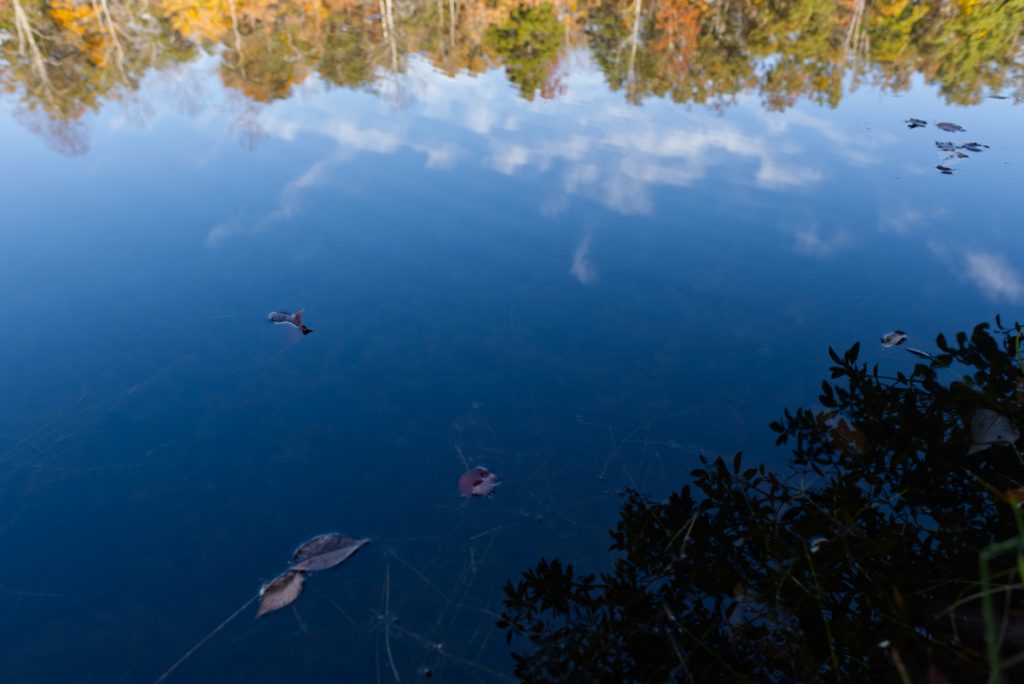
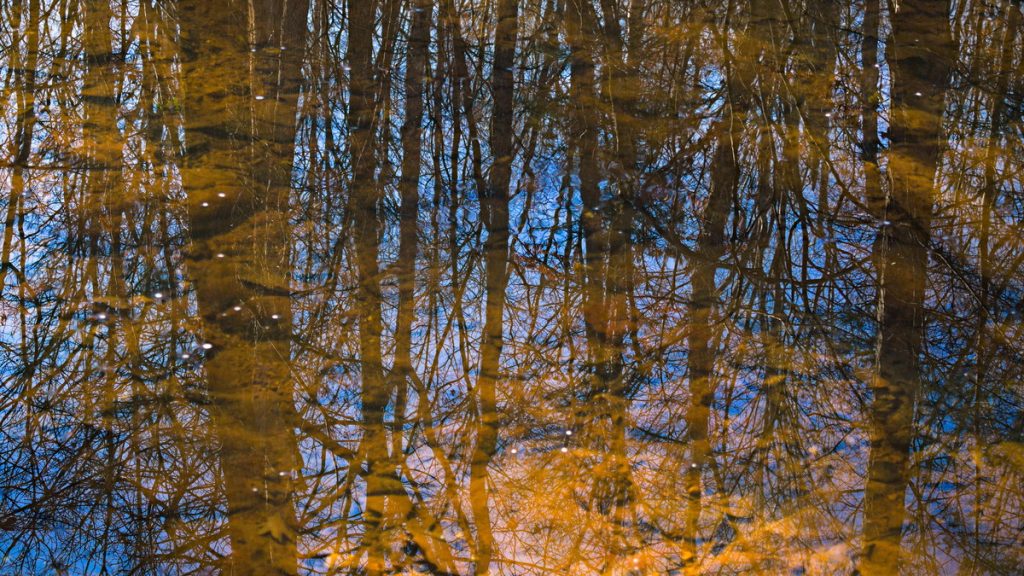
As the River Bends

As the River Bends © 2026 Matthew Word Bain, all rights reserved.

This is the first image in Les Images sans Mots, a series of original photographs. While in the future these posts will not contain words, an introduction to the series seems fitting.

I have published many photograph and poem pairings online; this series marks a return to posting images on their own.

Besides a title, these images will remain otherwise unaccompanied by words.

I will post an image in this series every waxing quarter moon.

As the River Bends Read More »

How to Make a Website Functional by Writing a Blog – Part One

I have decided to proceed with blogging on this website before making any other effort to dress it up.

I would like to select fonts, choose header images, set up an email sign up form, choose a newsletter delivery platform, and a dozen other things to make the site more presentable.

And eventually I will do all of these things. But I have realized that in my current workflow, all of these tasks remain out of sight, out of mind, and so they remain undone.

It is interesting to consider that all of these accoutrements are really just that – accoutrements. They do nothing to advance the primary function of the website: a platform for publishing my creative work.

By publishing the blog instead of making the site look nice, the website functions as intended from the publication of the first post.

By cutting to the chase and blogging right away, I am creating meaningful content for the site from the beginning. I also place myself in the context of the website on a regular basis and thus within range of working on it drip by drip. In the meantime, the website functions as intended – a platform for publishing my creative work.

I am not worried about anyone finding the site inhospitable while I focus on function. I am not even planning to publicize the site until I have established a solid track record on the blog. That way, by the time most anyone finds it, it will be filled with substantive content. Doing so also insures I have developed a process that reliably generates new material on the site.

I believe the content is more valuable than the aesthetic appeal of the site anyway, and over time the appearance will also improve.

So, how does one make a website functional? Ultimately that will depend on the intended function of the website. But the principle undergirding my process should apply in all cases: begin by using it for its intended purpose.

Leave secondary purposes in second place among your priorities: first things first, second things second. In my case, email sign up forms, site structure, appearance, etc., all of these can wait until a solid practice of blogging is established.

Secondary purposes are only meaningful in support of primary purposes, so I will focus on primary purposes first.

In the next several posts I will go into detail about my process of creating the blog and how I am bringing to bear certain specific tools and principles along the way. While your process is sure to be different from mine, I am confident these tools and principles are universal in their utility and thus can be adapted to fit any process.

How to Make a Website Functional by Writing a Blog – Part One Read More »